
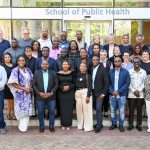
CEPSA’s first pharmacovigilance training workshop
8 December 2025
CEPSA Newsletter (December 2025)
2 February 2026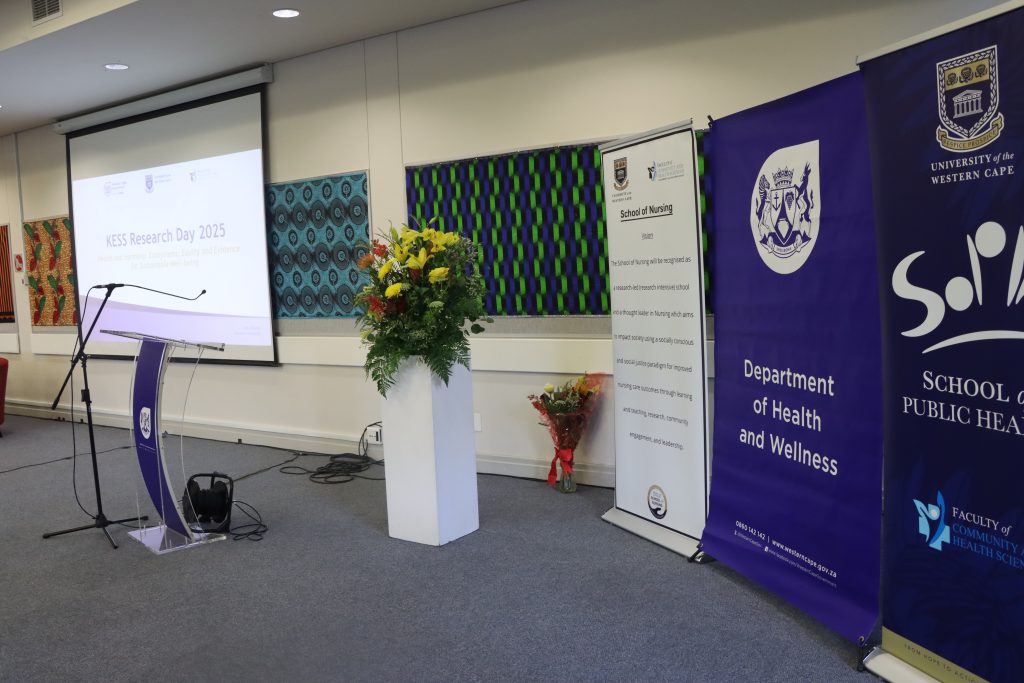
Health and Harmony Take Centre Stage at KESS Research Day 2025
Theme: Health and Harmony: Ecosystems, Equity and Evidence for Sustainable Well-being
Khayelitsha and Eastern Substructure (KESS) Research Day 2025 unfolded in the bustling foyer of the School of Public Health (SOPH), where more than 230 academics, health professionals, and community representatives gathered under the theme “Health and Harmony: Ecosystems, Equity and Evidence for Sustainable Well-being.” What began as a quiet Friday morning quickly transformed into a vibrant space of dialogue, reflection, and collaboration.
Opening remarks from senior leadership — including Prof. Olagoke Akintola, Prof. Anita Padmanabhanunni, and Dr. Matete Madiba — set an inspiring tone, underscoring the power of research to inform practice and improve lives. Dr. Madiba’s personal reflection on the lifesaving value of accessible knowledge resonated deeply with attendees. A compelling call to “make research real” came from community leader James Kruger, who urged researchers to bridge academic work with lived experience and proposed hosting future research days in Khayelitsha itself.
Delivering the keynote address, Prof. Therese Fish challenged participants to confront the persistent gap between research and real-world impact, emphasising that “knowledge must not be generated if it’s not for use.” Her message reinforced the need for collaboration, clear dissemination pathways, and feedback loops that elevate research from paper to practice.
Energy filled the venue as the SIYAZAMA TRADITIONAL DANCERS led a lively interlude before participants dispersed into a series of well-attended parallel sessions. Discussions spanned experiences of people living with HIV and TB, maternal and adolescent health, violence prevention, non-communicable diseases, and injury care. Across sessions, speakers highlighted the importance of language, stigma reduction, ecosystem-building, and the social determinants that shape health realities in communities.
The day also spotlighted the Imarisha Project, reminding delegates of the need to support frontline workers and nurture collaborative, community-grounded research approaches.
As conversations continued over lunch and closing reflections, James Kruger captured the spirit of the event: “We did good with this research day. I think we bit this cherry well.”
The 2025 KESS Research Day stood not only as an academic forum but as a powerful affirmation of what is possible when health, harmony, and humanity converge.
It began like any other Friday morning — the quiet hum of the School of Public Health (SOPH) foyer, tables neatly lined with name tags and guest lists, a handful of staff ready to greet early arrivals. Around 8.45 am, the silence had given way to energy and anticipation as the SOPH foyer was filled with academics, health professionals, and community representatives for the Khayelitsha and Eastern Substructure (KESS) Research Day 2025.
Themed “Health and Harmony: Ecosystems, Equity and Evidence for Sustainable Well-being,” this event drew more than 230 attendees, surpassing expectations and transforming the SOPH space into a buzzing hub of dialogue and collaboration.
There were attendees from different institutions, such as the University of Cape Town, Stellenbosch University, University of the Western Cape, the Western Cape Department of Health and Wellness, the South African Medical Research Council, and CEC Africa, together with health practitioners and community members from Khayelitsha and Eersteriver.
Opening the Conversation: Setting the Tone for Change
Prof. Renier Coetzee (UWC), the Master of the Ceremony, warmly welcomed the delegates, setting the tone for the day.
In his opening remarks, as he also welcomed the guests, Prof. Olagoke Akintola, Director of UWC’s School of Public Health, shared the following sentiments, reflecting on the importance of this research day:
“Hopefully, from this day, we will know where we are — and where we go from here.”
Prof. Anita Padmanabhanunni, Dean of the Faculty of Community and Health Sciences, echoed this sentiment, highlighting how the Research Day serves as a platform for shared solutions to community challenges.
There was a deeply personal reflection from Dr. Matete Madiba, UWC’s Deputy Vice-Chancellor for Student Development and Support. Dr Madiba recalled a childhood experience of being punished for refusing food — food she later discovered was actually toxic to her body.
“Back then, I didn’t have access to knowledge,” she said. “Today, because of research like yours, others do. Research must reach people — I wouldn’t be here if I didn’t have access to knowledge.”
“Making Research Real” — A Call to Action
James Kruger, a Director at Western Cape Government and one of the event’s key voices, reminded the audience of the urgent need to bridge academia and lived experience:
“We are embedded in poor communities … we must merge academia with the ordinary. Research must be real for our people, otherwise it’s just words.”
James Kruger emphasized the value of taking research to the community, proposing that the next KESS Research Day be held in Khayelitsha itself. He expressed his joy and satisfaction of this research day:
“This is the highlight of my year,” he added. “October 31 will be cemented in my memory. This sitting together and listening to each other gives me great joy.”
Bridging the Research-Policy Gap
Delivering the keynote address, Prof. Therese Fish, Vice Dean for Clinical Services and Social Impact at Stellenbosch University, captivated the audience with her talk “Mind the Gap: From Research to Policy, Practice, and Impact in the Field of Health.”
She challenged researchers to think critically about the purpose and reach of their work:
“Knowledge must not be generated if it’s not for use,” she said, emphasising the importance of collaboration between researchers, civil society, and community activists.
Prof. Fish identified a few barriers, such as differing timelines, language gaps, and competing priorities, which can be key factors that widen the distance between research and real-world impact. She urged researchers to think of the following as they conduct their research:
- How will you disseminate your work?
- How will it affect the public?
- What feedback mechanisms exist?
“Clear answers to these,” she noted, “can help us mind the gap between research, policy, practice, and action.”
Energy, Dance, and Discussion
After the thought-provoking morning sessions, the SIYAZAMA TRADITIONAL DANCERS lifted spirits with energetic performances of song and dance. Laughter, music, dance, and conversations filled the foyer before participants broke into parallel sessions exploring the following themes:
- Experiences of People Living with HIV and TB
- Research and Interventions Targeting Pregnant Mothers, Children, and Adolescents
- Building Ecosystems to Address Violence and Disease Burden
- Improving Access to Care for People with Traumatic Injuries
Every room was packed with some colleagues standing during presentations as the venues were at full capacity, a testament to the appetite for knowledge-sharing and community-driven research.
A few quotes from these sessions:
There is an issue of language use. We call these areas ‘hot spot’ areas. We need to stop this, as such terms can unintentionally promote high violence in these areas. It’s not just about guns and boots on the ground. We need to bring the human element into the mix. Rather, we must refer to them as ‘socially disorganised’ areas.
– Ms. Nolusindiso Dyantyi and Ms. Thabiswa Mpazwa, Deputy Director of the Violence Prevention Unit, Western Cape Department of Health and Wellness. Building Ecosystems to Measure Burden and Address Violence, NCDs and HIV
We work with people who live in the communities. we need to think about how we can bring people together and link the different players. Finding a way to embed the different players together is crucial. Perhaps we should have the research day in Khayelitsha.
-Prof. Hanani Tabana, University of the Western Cape School of Public Health. Research and Interventions Targeting Pregnant Mothers, Children and Early Adolescents
Stigma is still attached to TB, and we are facing challenges with treatment adherence. We must assess other issues around adherence to treatment so that TB patients finish their treatment course. Also, let’s be careful with our language; let’s not say ‘drugs’, it’s better we say ‘medication’. There are other social determinants of health that require our attention, such as the challenges of poverty and hunger. You tell patients that they need to take medication after they eat. Eat what? We need to come together and solve these issues.
-Experiences of People Living with HIV and TB
Looking Ahead: Collaboration and Action
Before lunch, attention turned to the Imarisha Project, which focuses on strengthening healthcare systems through participatory approaches. The discussion underscored the importance of caring for frontline workers — “Who cares for the carer, who protects the protector?” — and highlighted the role of collaboration in meaningful, community-grounded research.
In closing, James Kruger reaffirmed KESS’s commitment to action research and building stronger bridges between universities and communities:
“We want people from communities to experience being on campus — that alone can be a powerful motivation,” he said.
As the day wound down, after the afternoon parallel sessions, conversations lingered over lunch, cameras flashed, and smiles were shared among old friends and new collaborators. Reflecting on the success of the event, James Kruger concluded with a grin:
“We did good with this research day. I think we bit this cherry well.”
And indeed, we did. The KESS Research Day 2025 was more than an academic gathering — it was a vivid reminder of what happens when health, harmony, and humanity meet under one roof.