
Health care seeking practices and access to health care by migrant parents and/or caregivers with under-five children in the Western Cape Province in South Africa: An exploratory study
27 February 2025
- Asha George
(Lead- UWC) - Johanna Riha
(Co-lead-UNU-IIGH) - Sally Mtenga
(Co- applicant Tanzania-IHI) - Hérve Hien
(Co- applicant- Burkina Faso- Institut national de santé publique) - Joël Arthur Kiendrébéogo
(Co- applicant Burkina-Faso- Recherche pour la Santé et le Développement (RESADE)
UWC Team Members
*indicates student or postdoctoral fellow
- Dr Olusegun Odumosu (Global Consortium Manager)
- Vuyo Mjijelwa (South African Program Manager)
- Dr Tanya Jacobs (Senior Advisor)
- Dr. Woldekidan Kifle Amde (Capacity Strengthening)
- *Bonheur Nfurayase (Phd Candidate)
- *Shehnaz Munshi (Phd Candidate)
- Teresa de Lima (Senior Financial Administrator)
- Carnita Ernest (Grants manager and Senior Project Manager for SOPH)
- Tamlin Petersen (Project admin. coordinator)
Imarisha: Strengthening PHC by addressing gendered workplace violence
This consortium aims to fill an urgent and widespread gap in understanding and addressing workplace violence and its gendered dimensions experienced by the PHC workforce in three countries— Burkina Faso, South Africa and Tanzania—where high proportions of women work as PHC health workers and have reported high levels of violence. Imarisha is a Swahili word meaning ‘to strengthen’
Project Period
01 March 2025 – 28 Feb 2030
Background:
- Primary health workers are the backbone of a strong health system, without whose effort and dedication, the Universal Health Coverage (UHC) agenda cannot be met. Despite their significance to achieving UHC, health workers are underpaid and unsupported by workplace regulations and policies.
- Female health workers, who constitute the majority of the primary health workforce worldwide, face greater disadvantage due to societal gender restrictive norms and inequalities that replicate inside health systems, including their experience of workplace violence.
- Workplace violence is pervasive compromising safety, performance and ultimately well-being. While violence affects both male and female health workers, the prevalence and consequences are worse for women. Yet there is insufficient data on the gendered dimensions of workplace violence and the needs of health workers and a paucity of policies in the health sector on workplace violence protection/
Aims & Objectives:
The objectives are to undertake policy-relevant research to document the nature of PHC workplace violence and its gendered dimensions, and address the conceptual and intervention gaps in the three countries. Our research objectives are exploratory and action oriented, designed to interlink for impact. They are
- To map public health sector human resource policies and assess how they recognize and respond to workplace violence and its gendered dimensions in Burkina Faso, Tanzania and South Africa.
- To document the nature of PHC workplace violence and its gendered dimensions in Burkina Faso, Tanzania and South Africa from the perspective of health workers, managers and community members.
- To co-design and implement context specific system responses to address PHC workplace violence and its gendered dimensions in Burkina Faso, Tanzania and South Africa.
- To assess and reflect on the experiences of these system responses with stakeholders to sustain changes in policies for workplace violence and its gender dimensions in Burkina Faso, Tanzania and South Africa and beyond.
Methods:
Using desk reviews of policies, qualitative research that explores the lived experiences of health workers enduring violence, surveys to document the extent of violence, and participatory action research methods to ally with health workers, managers and communities to co-produce and co-design actionable health system changes, we aim to support adaptive learning to strengthen PHC.
Our thesis is that building a learning consortium to study gendered dimensions of workplace violence infused with decolonial and feminist approaches (i.e, anchor research in communities, encourage diverse disciplines and points of views, and focus on solutions) will help identify context relevant health system actions that can be implemented as adaptive learning and sustained beyond the life of the project.

United Nations University- International Institute for Global Health (UNU-IIGH) – Malaysia
- Johanna Riha- Co PI
- Jee Jee Kiu- Finance Manager
- Capucine Celery- Research Consultant- Knowledge Translation.
- Sapna Mishra- Capacity Strengthening lead.

Ifakara Health Institute– Tanzania
- Dr Sally Mtenga- Co- Applicant and Lead Tanzania
- Mohamed Mbaga- Budget and Grant Officer
- Dr Francis Levira- Statistician
- Irene Mashasi- Program Manager/Doctoral student
- Lorrainne Mathias- PhD Student
- Tabi Kibukila- Head of Project Accounts and Administration
- Elisante Abraham- Research Scientist

- Prof Herve Hien- Co- Applicant and Lead Burkina Faso
- Dr Ali Sie- Finance and Technical Director
- Mamadou Ouattara- Project Coordinator
- Arsene Satouro Some- Senior Researcher
- Mariam Seynou- Senior Researcher/ Project maanger
- Lingani Moustapha- Finance Manager
- Mariam Ouattara- Assistant Project Manager
- Alphonso Zakane- Data Manager
- Seydou Michel Compaore- Communicator
- Ouba Tewende Tina Yacine – PhD Candidate
- Dr Yoda Bianca- Masters Student

Recherche pour la Santé et le Développement (RESADE) – Burkina Faso
- Prof Joël Arthur Kiendrébéogo– Co- Lead Burkina Faso
- Yamba Kafando- Researcher
- Sory Orokia- Researcher
- Arlette Zongo- Researcher
- Noelie Konsebo- Phd Candidate.
Related News
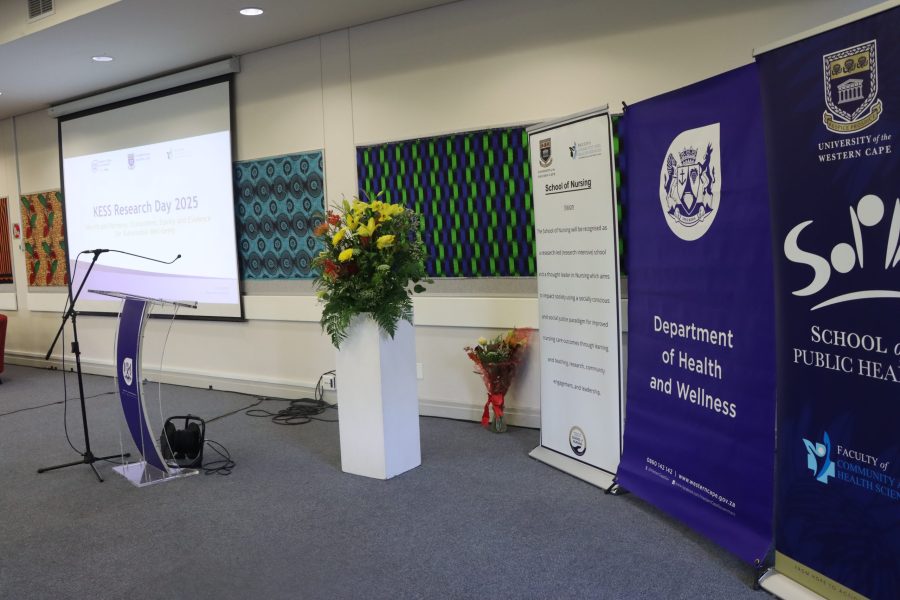
Health and Harmony Take Centre Stage at KESS Research Day 2025
Theme: Health and Harmony: Ecosystems, Equity and Evidence for Sustainable Well-being