Rethinking How We Address Gendered Workplace Violence in Primary Healthcare Settings: A Dialogue with Abi Badru Convened by the Imarisha consortium and PSI, the dialogue explored how to address the gender dimensions of workplace violence in PHC settings FIND OUT MORE Hands-On Capacity Building to Empower a New Generation of Pharmacovigilance Experts At the 5th Annual Conference on Pharmacoepidemiology in Africa, held in Accra, Ghana, from 20 – 22 April 2026, Dr Nicolas Praet delivered a podium presentation on the capacity-building activities of CEPSA. FIND OUT MORE Climate Change and Health - For Frontline Healthcare Workers Practical -in Person short course

Application deadline: 8th May
FIND OUT MORE
CEPSA Newsletter - March 2026 The Centre of Excellence For Pharmacovigilance in Southern Africa (CEPSA) is pleased to share its second quarterly newsletter. FIND OUT MORE
7 April 2025

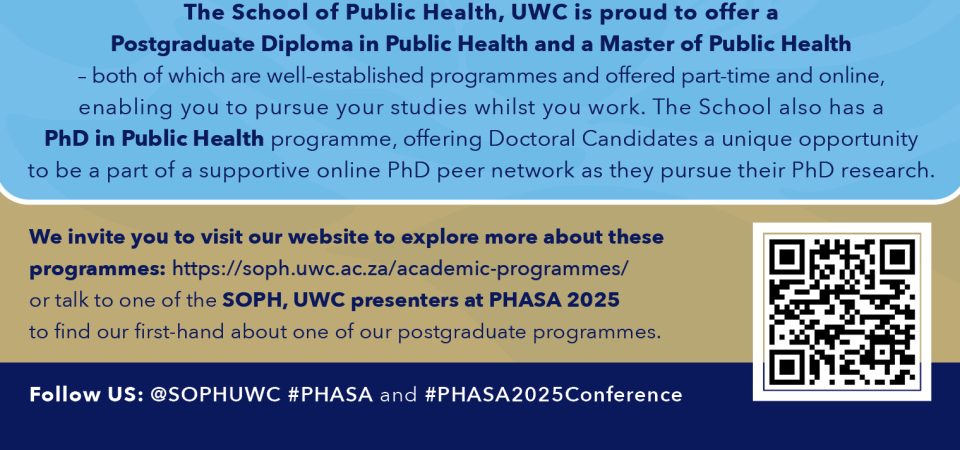
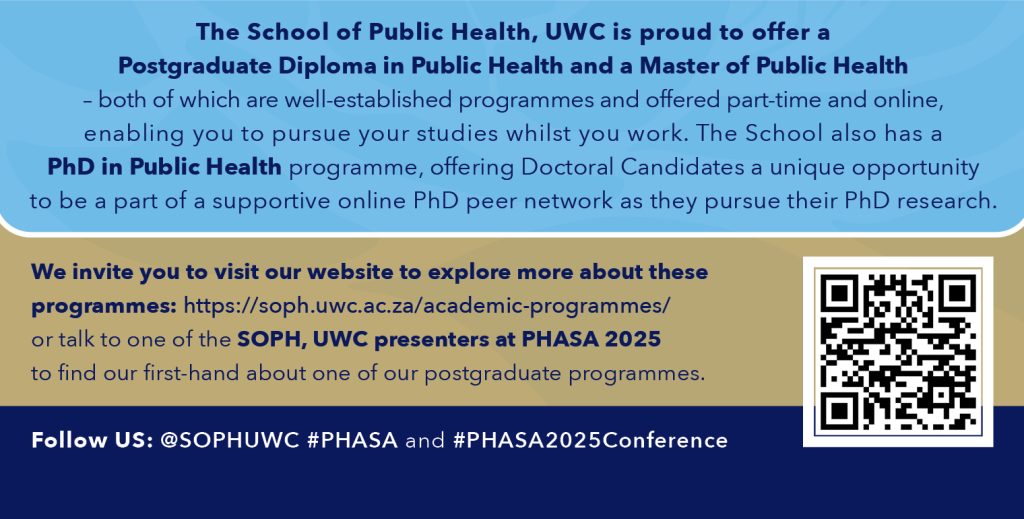
SOPH, UWC at PHASA 2025

18th Annual Public Health Conference: 6 – 9 APRIL 2025 - Partnerships for Public Health: Sculpting a Healthier Future Together
7 April 2025

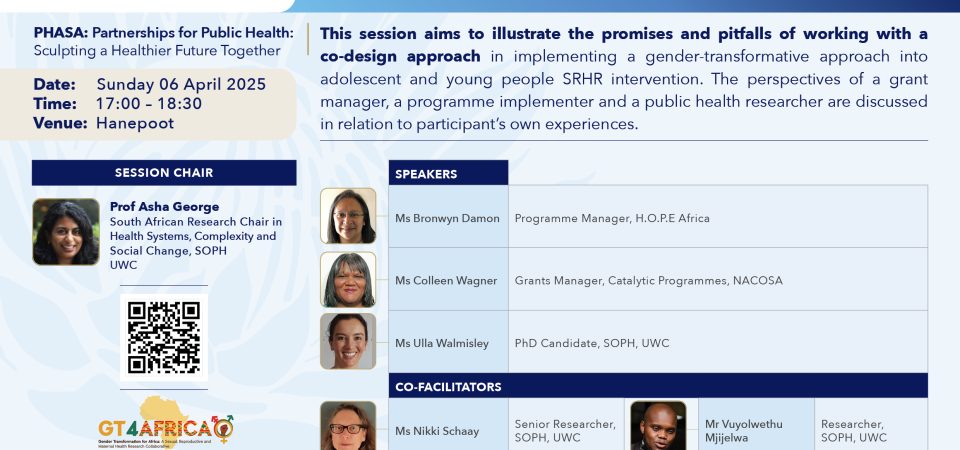
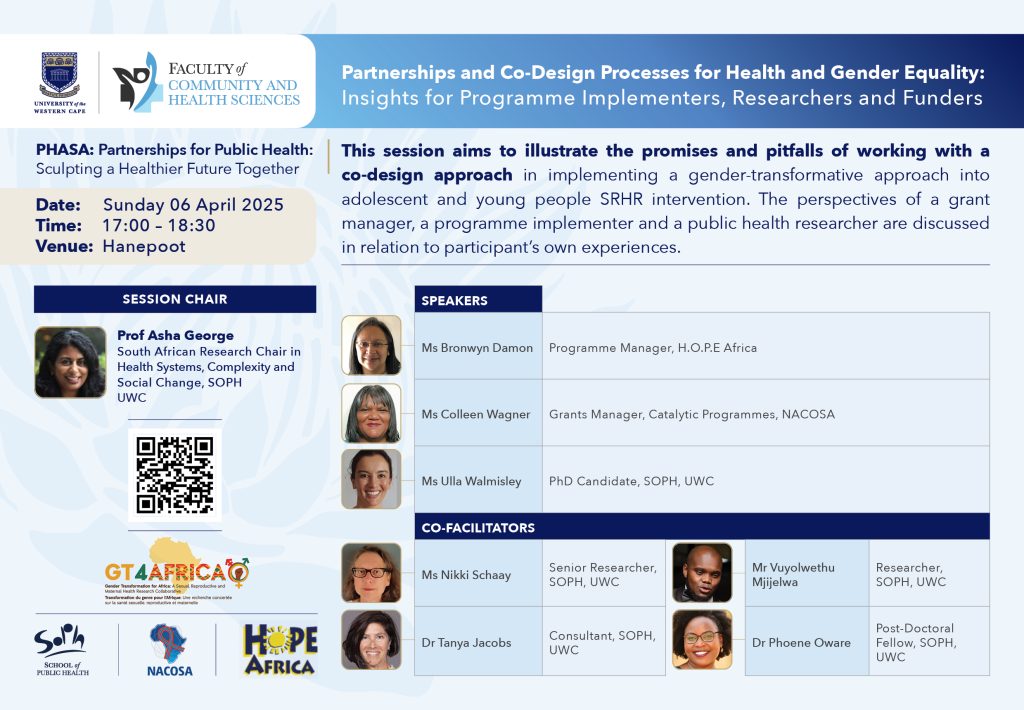
Partnerships and Co-Design Processes for Health and Gender Equality: Insights for Programme Implementers, Researchers and Funders

This session aims to illustrate the promises and pitfalls of working with a co-design approach in implementing a gender-transformative approach into adolescent and young people SRHR intervention. The perspectives of a grant manager, a programme implementer and a public health researcher are discussed in relation to participant’s own experiences.
3 April 2025

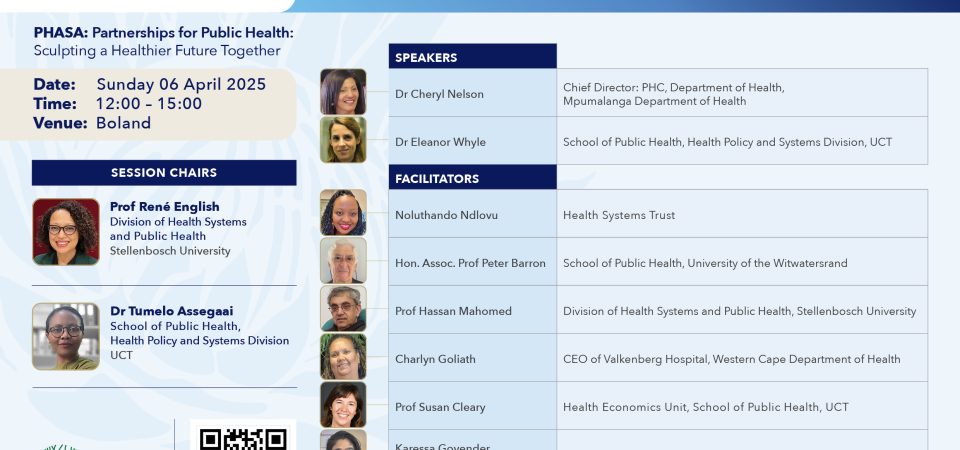
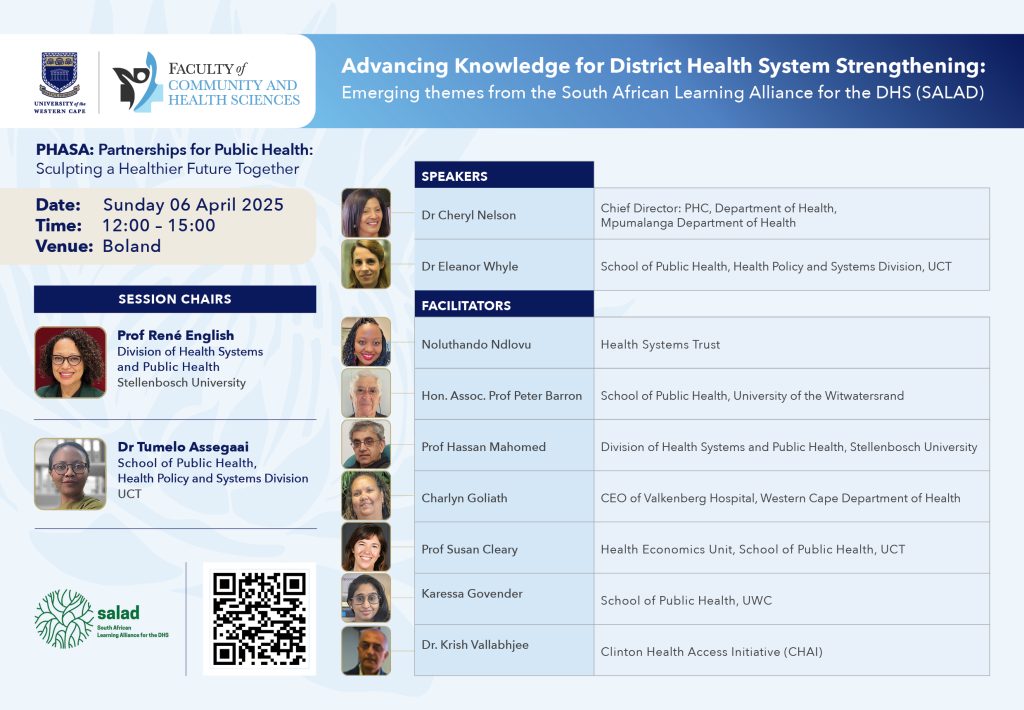
Advancing knowledge for district health system strengthening: emerging themes from the South African Learning Alliance for the DHS (SALAD)

SALAD is a learning network that connects health services managers at district, provincial and national level with health policy and system researchers. SALAD will reflect on its progress since inception through four themes: M&E, COPC, resource allocation and community-led monitoring while eliciting the perspectives of the attendees using world café.
23 April 2020

The power of people caring for those affected by Covid-19

Rather than large, sterile and clinical self-isolation centres, let’s imagine for a moment, that everyone who couldn’t self-isolate at home could be accommodated within their neighbourhoods — in an environment that was designed not to transmit Covid-19, while also being familiar, humanised and conducive to social and community bonds.